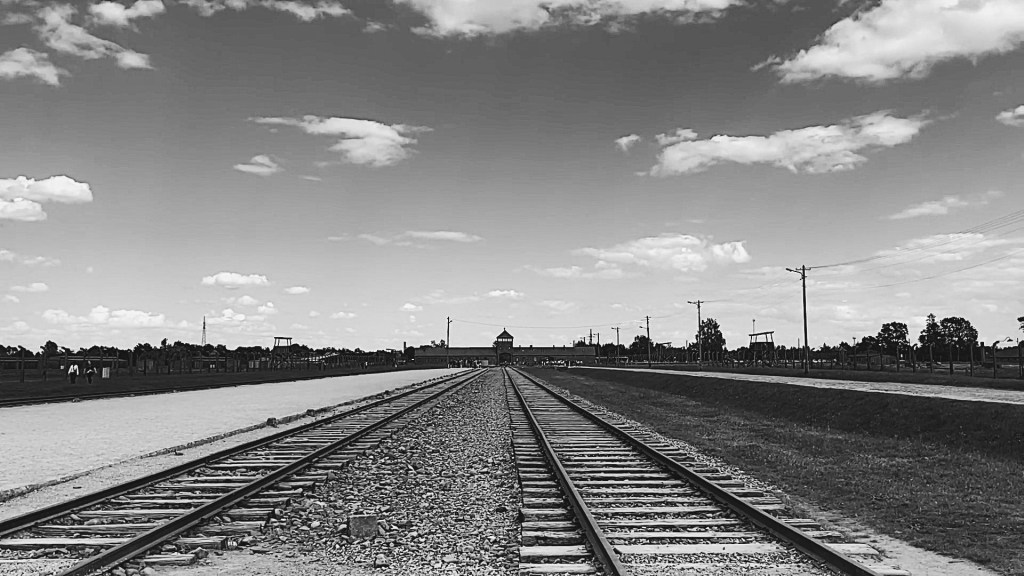
“Well, I’m back.”
This May, I travelled with a backpack to Europe–first to Berlin, then Dresden, Praha, Wien, and then finally to Kraków and Oświęcim, all by train, except for the initial flight to Berlin. You’ll probably remember my initial excitement at finally going away from home, to Europe, the land of art and wars and cultures of my dreams. I went there.
The trip across Eastern Europe was more than I imagined. I visited the Wall, countless museums (including the Casper David Friedrich exhibition), went to classical concerts, churches, and ultimately ended up falling in love with the city of Kraków. (One simply has to take a bite of kremówka, listen to the Queen Jadwiga lores, and take a walk along the banks of the Vistula with the Wawel Castle beside you.)
It was utterly magical, including the mishap where I got on the wrong side of the train that was bound for Wrocław, the opposite of Oświęcim, tried (and failed) to speak Duolingo-Polish and spent a night in a station. It was just like the picture books, the academia books, the posh travelogues and aesthetic instagram accounts I’ve come across before. I came out of the trip enlightened, with a heightened sense of self-actualisation that can only come from travelling.
Or so I want to say.
I came out of the trip enlightened, with a heightened sense of self-actualisation that can only come from travelling.
Or so I want to say.
My destination was the sleepy town of Oświęcim, more infamously known as Auschwitz during World War II. After having arrived there at five in the morning (due to my said transportation mishap), I could not imagine a more beautiful sunrise or more breathtaking a countryside as Oświęcim.
As a part of my program, we first lived some fifteen minute walk from the Auschwitz-Birkenau Museum and Memorial, then right beside Auschwitz I in the latter half of our study-visit.
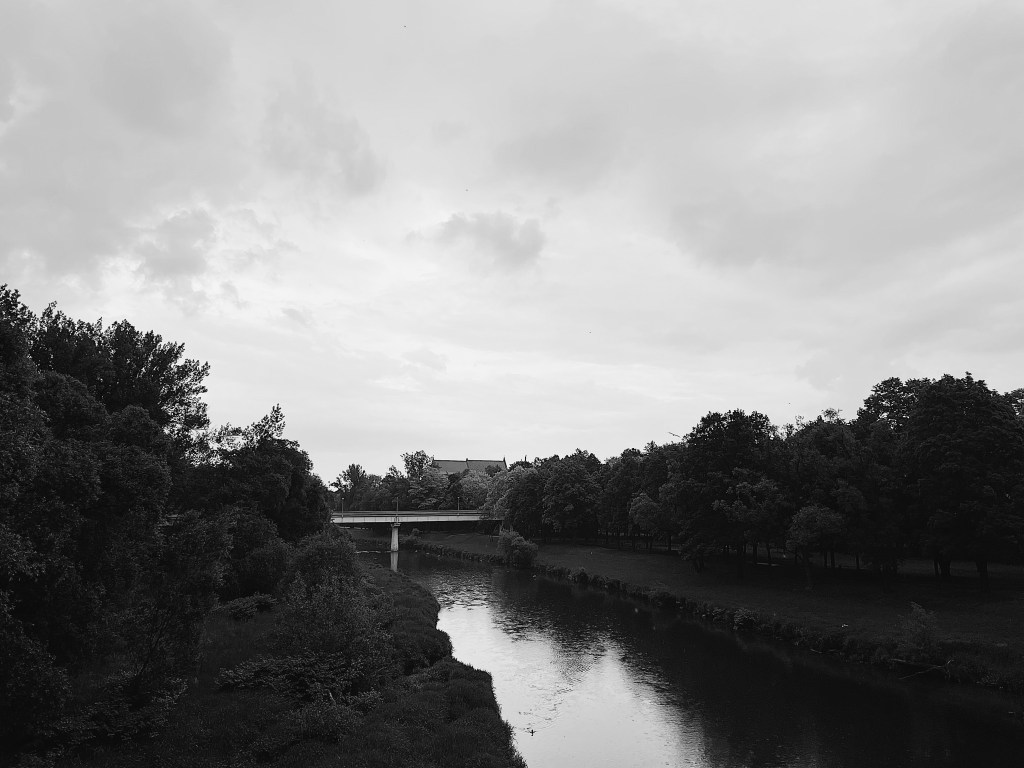
Contrary to the images of horror the location is often associated with, the museum grounds were quiet in the mornings, then quite crowded by noon from the onslaught of visitors from around the world. The fair May weather held throughout the stay, so most days, one could hear the quiet murmur of the river nearby and the chirping conversation of birdsongs. The tour guides are fluent in countless different languages, including Japanese. (I got a chance to go for dinner with this guide, who had been living there for almost thirty years now. To this date, he is the only Japanese guide.) Because we were not a traditional “visitor” in the sense we would be on the stay there for two weeks, it soon became apparent to me that even Auschwitz could not escape the fate of tourist destinations.
On our second or third tour on the Auschwitz I campgrounds (i.e. the barracks that are associated with Auschwitz-Birkenau, the gas-chambers and extended campgrounds, but most often showed on films with the gate that was much smaller than Birkenau), the museum staff and researchers began to highlight the areas on the campground where visitors engaged in acts of vandalism, such as scribbling initials on the walls (e.g. W + L heart, Angie was here 20XX, etc.) and while the staff worked hard to ensure such acts did not happen, with large tour groups visiting daily, it was mostly impossible to prevent. Also, contrary to popular beliefs, the “scratch marks” on the walls inside the Crematorium I in Auschwitz I were not made by prisoners–but by visitors. I could hardly believe it.
But a more shocking sight would catch my eyes later that day.
Our leading professor gave everyone a permission to walk around the campgrounds, telling us to take note of whatever caught our sight. She added, almost as an after-thought, “Oh, and try to see what the visitors are doing at the gate.”
The gate has popularise the image of Auschwitz then and now. Inscribed with the metal words, Arbeit macht Frei, it notes the irony that Work would set one Free. It was then, with double-irony as I watched a group of tourists take out their phones and snap a selfie at the gate. A numbness spread over me as I watched a group of nuns pose with peace signs, check the picture, and retake it.
That night, in our reflection time, my colleagues and I mentioned these “visitor behaviours” as concerning. Our professor smiled a little and gently reminded us, “We are not here to judge.”
But even after this, I began to see, little by little, that the lines between the museum, the memorial grounds, and the historic camp across the space of time blurred. “Auschwitz” was not just one camp, but three camps, with sub-camps and labour camps attached to it. The Auschwitz concentration camp was a part of the larger network of concentration camps that dotted Europe, some of these obscured from memory save for the academics in the field and perhaps locals–but even then, the locals live there. They could not keep remembering the past, but live as people of the present. Yet the present is in conversation with the past, whether it seems to be forgotten or not.
After the expulsion of the Jewish population from these countries (where, in some cases, anywhere from 50~90% of the Jewish population were forcibly removed), anti-Semitism is still on the rise. To this date, I do not know what to do with the image of a sticker at the bus stop in front of the museum with the words, “Nuke Israel!” Given that the Jewish segregation and ghetto has existed in policy from the Third Lateran Council of 1179 and colloquially from the 16th century onward, perhaps this notion of “Do away with the Jews” is not surprising. (Here, I speak ironically, in case one does not understand it.) Yet the abject sense of having misplaced one’s stomach lingers at the presence of anti-Semitism in a location that is supposed to be about remembering what happens when we turn to hate.
We walked the residential area where the other gas chambers (the “little white and red houses”) and ash-burial grounds lay. We walked along the birch forest and the mud, soft and silver, the breeze whispering and the sun glittering through the leaves. We listened to the silence and to the explanation of the leading researchers and museum workers who had shown these paths, not to many, but to some other students before us. There was the camp and the town and the people who came and left and stayed. And the quietness remained. My mind became increasingly confused.
On the day before our last, we spent the day walking around the entireity of Auschwitz I, Auschwitz-Birkenau, and as much of the city and connected labour camp grounds as possible. A thread of railway connected me, kept me grounded in my walk, which I followed–likely the paths some people took before they were stripped of their identities into numbers, or simply put into gas chambers, never to be seen again. I sat down at the edge of the train tracks, at the very end of them where I could see the Judenrampe, the ruins of the two gas chambers on both sides of me, where visitors walked. The sun had come out from the multi-layered stratocumulus clouds. It was not yet cool, but not warm enough, either, and a subtle chill settled on my skin.
It was then that I knew I would never come to understand all of it.
I would spend the next three months (i.e. all of my summer) grappling with what I had witnessed. I vacillated between wanting to forget the innumerable deaths, the murders, the immeasurable suffering that had happened not just in the unassuming town of Oświęcim, but all over Europe and wanting to know down to the minutest detail of what had actually happened–from the angle of the train deportation. For, just as the railroad carried me to the symbolic site of the Holocaust, so it “transported” millions to their deaths. The railway became my anchoring point, what made sense in the senseless mass murders. And it simply would not have been possible for the Deportation to have happened with people not standing by.
And in my research and the visit, I could see how we stand by today. We stand by whenever we close our mouths when the conversation turns toward a political leaning not accepted by many. We stand by whenever we flick through a social media post that condemns a whole nation as genocidal. We stand by when students organise a protest on university campuses for a cause they believe is just.
I stand by.
I stand by the gates of Auschwitz I and take a selfie when I try to understand the calculated murder of generations of people labelled as “sub-human” because I cannot. One cannot understand it.
Perhaps it was the moment I met Hannah Arendt for the first time in my political philosophy class. Or when I gave a lecture on hers and Kant’s philosophy. Or when I heard the last year’s research group present at the conference.
I will never know. But what I do know, is that one cannot understand, will never possibly achieve understanding of what drives meaningless but purposeful hate, its consequences, and the only way one can make sense of such a broken world is through one’s lenses…ourselves.
I will never see through the world any other way; that is why I cannot trust myself. We should not trust our “selfies.” It is only through God’s lenses that we can understand clearly what–for whom–we were made for. Imago Dei. We are all created in the image of God, from wherein we have inherent dignity to live and to respect each other’s lives. And at the present, I will rest the case there.
26And God said, Let us make man in Our image, after Our likeness (…) 27So God created man in His own image, in the image of God created he him; male and female created He them.
31And God saw every thing that He had made, and, behold, it was very good. And the evening and the morning were the sixth day.
(Genesis 1:26-27, 31)
Read more about the Auschwitz-Birkenau Museum and the Holocaust
- MEMORIAL AND MUSEUM OF AUSCHWITZ-BIRKENAU
- The Train to Auschwitz website (my research site)
- The Train to Auschwitz Conference Presentation Link
- Auschwitz: History, Place and People Academic Guide (Edited by Bożena Karwowska, Jacek Lachendro, and Piotr Setkiewicz)
- The More I Know, The Less I Understand: Young Researchers’ Essays on Witnessing Auschwitz
 少数派。
少数派。 
2 responses to “Taking a Selfie At Auschwitz”
What an important lesson ans amazing opportunity to travel and learn more about our world. Your writing is phenomenal!
LikeLiked by 2 people
Thank you! It really was an experience of a lifetime. I’m so blessed to have been able to have it.
LikeLike