Album of the Week #3
Long time no see! I’ve been quite busy this past summer and autumn~winter season (now going into 2026) with various engagements, ranging from my first ever mission trip (to Japan, my home country), to going on the LSAT-grind and trying not to stress as I apply to law school (which you can read about in the previous post here). I’m in a little pocket of “free” time now, so I’m back here to share some music with you 🙂
A wonderful lightning out of nowhere struck me, and now I am absolutely besotted with Saint-Saëns opera, Samson et Dalila (and especially its Bacchanale). I think one of the reasons is that I’ve been reading/watching 青のオーケストラ(Blue Orchestra), an amazing manga series about a young violinist with a broken past who joins a large orchestra at his high school. If you are a fan of classics like のだめカンタービレ(Nodame Cantabile) and 4月は君の嘘 (Your Life in April), you will love this series! As someone who started viola in high school and joined the orchestra, this series strikes all of the right notes. I also love the fact they highlight underrated classical music…like this one!
With that aside, let me introduce you to Saint-Saëns’ Samson et Dalila!
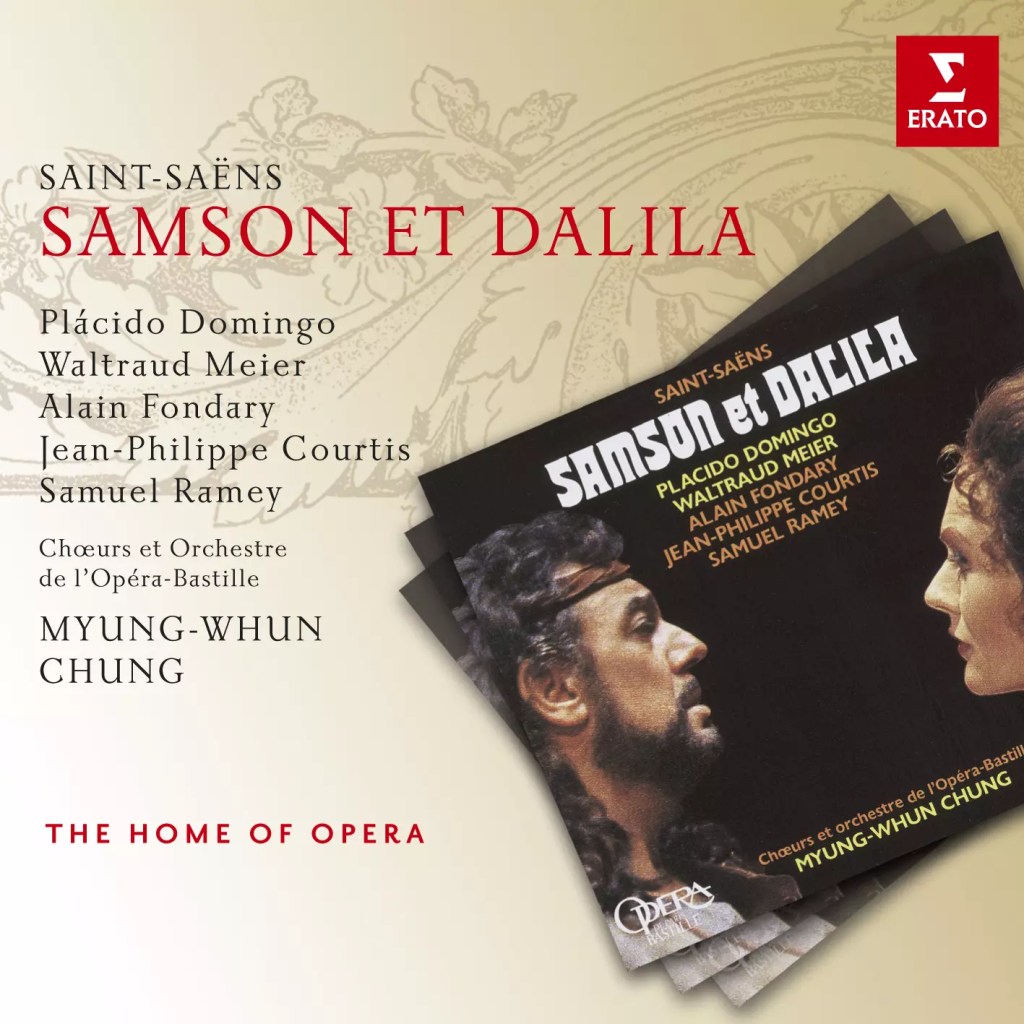
Quick Stats
Full title: Samson et Dalila, Op. 47
Conductor: Myung-Whun Chung
Orchestra: Opéra-Bastille
Composed: 1867-1876
Libretto by: Ferdinand Lemaire
First Performed at: Grossherzogliches (Grand Ducal) Theatre (now the Staatskapelle Weimar)
Acts: 3
Scoring: 3 Flutes, 2 Oboes, English Horn, 2 Clarinets, Bass Clarinet, 2 Bassoons, Contrabasson, 4 Horns, 2 Trumpets, 2 Cornets, 3 Trombones, Tuba, 2 Ophicleides, 2 Harps, Timpani, Bass Drum, Cymbals, Triangle, Glockenspiel, Crotales, Wood and Metal (“iron”) Castanets, Tambourine, Tamtam, Violins 1&2, Viola, Cello, Basses
Features: Dalia (Mezzo-soprano), Samson (Tenor), High Priest of Dagon (Baritone), Abimélech (Bass), other side roles, and Chorus
Listen on:
Why it moves me:
I actually don’t know exactly why this piece has grabbed a hold of my heart and soul to the level it has–ever since I first heard it, it’s consistently been on my top charts for Spotify, and like the properly music-crazy person I am, I’ve unearthed an old CD with the Baccanale recorded from 1987. I’ve also been reading the score and the opera liberetto for a while, as well as re-reading parts of Judges 13-16, and as chance would have it, one of the Sunday sermons (I think in January?) was on Samson.
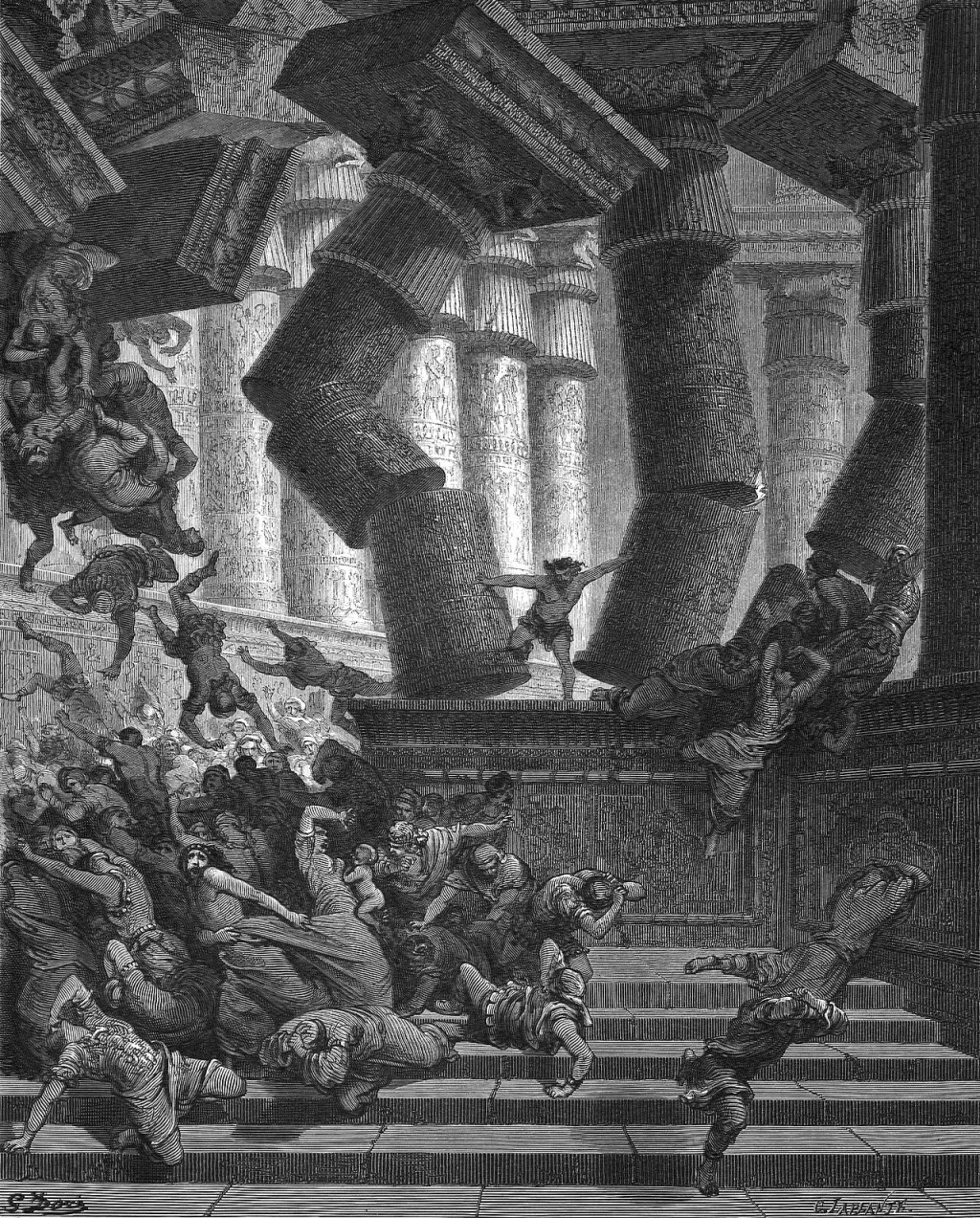
One reason I have gathered is the inherent tragedy of Samson, who time and time again rejects God’s plan for him to properly lead the Israelites as a Nazarite, a person consecrated unto God, and turns to the path of destruction and ruin. The Bacchanale exemplifies this end of destruction that sin brings about, which is perhaps the locus that I continually ponder over–and remind myself of the destructive power of sin that is inherent in human beings. Saint-Saëns perfectly captures this in Samson et Dalila, and I am awed, as well as dismayed, at how we can end up like Samson if not for God’s great mercy and love that gave us His Son as a ransom for our sins. Even then, the message is clear–we can choose to follow God, to serve Him, or to not serve Him and end up destroyed. This simple but vital message rings clear and true through this piece.
Mon cœur s’ouvre à ta voix,
comme s’ouvrent les fleurs
aux baisers de l’aurore!“Mon cœur s’ouvre à ta voix–My heart opens itself to your voice” from Samson et Dalila, Act 2, Scene III.
28 And Samson called unto the Lord, and said, O Lord God, remember me, I pray thee, and strengthen me, I pray thee, only this once, O God, that I may be at once avenged of the Philistines for my two eyes.
(Judges 16: 28-30, KJV)
29 And Samson took hold of the two middle pillars upon which the house stood, and on which it was borne up, of the one with his right hand, and of the other with his left.
30 And Samson said, Let me die with the Philistines. And he bowed himself with all his might; and the house fell upon the lords, and upon all the people that were therein. So the dead which he slew at his death were more than they which he slew in his life.
Sources & Further Readings
- Saint-Saëns’ Samson et Dalila: A discographical survey, Ralph Moore. (Fascinating read on all of the recordings out there.)
- Samson and Delilah by Camille Saint-Saëns, The Trump Kennedy Center (A simple and readable overview of the opera)
- Complete Original Score
- Wikipedia (This page gives a great overview.)
 少数派。
少数派。 